
The Sad Journey
Operation File: ICHOR/CASE-1912-03-04-A
30 January 1912
Regarding the Matter of the Melancholy Suicides
At first blush, the case seemed a matter of simple statistics. A spike in self-terminations among London’s middle class. Each incident possessed a tragically mundane explanation—grief, financial ruin, a broken heart… Yet the numbers told a different story. The usual monthly toll for our city hovers around 160 souls. January saw that figure climb to 214, and February, a staggering 256. The College tasked me with finding a thread, and find one I did. Over half the deceased had been recent passengers on the London-to-York line. More specifically, all had occupied Carriage Four. Seldom in our line of work does a case present itself with such a direct signpost.
And so, I made my way to King's Cross and purchased a ticket to York. Carriage Four. An EXO was somewhere within its confines, I was certain, and I would root it out before luncheon. How naive I was.
1 February 1912
I would report that my first journey was entirely fruitless—no oddments of peculiar design, no spectral phenomena, no strange sensations… were it not for Her. Sandra Arjani. We were acquainted, having crossed paths during that regrettable affair in Egypt in 1910, and on a few other occasions where the aims of the Invisible College overlapped with those of the Black Orchids. A true professional. The moment I saw her, standing there in that tailored black coat and a tiny hat adorned with orchids, I knew. We were here for the same quarry. Our eyes met, and a flicker of a smile—one of recognition—danced in her impossibly green eyes. But that was the extent of it. She took a seat at the far end of the carriage, her back to me. Even if we were hunting the same EXO, she offered no invitation for a joint venture. Her choice.
That first trip yielded nothing. I resolved to continue the surveillance, returning to London only to purchase another ticket for the same carriage on the following day's service. And again. And again. On the third journey, Sandra approached and slid into the seat opposite me. "Hello, Will," she said simply, and I knew she remembered Egypt. We began to talk, and it became clear that some things remain unchanged by time. We still understood one another with half-spoken words. In a two-hour conversation, we never once uttered "EXO," "operation," or the names of our respective societies, yet we managed to dissect this grim business in exhaustive detail. The Black Orchids believed an EXO object was at play but had thus far failed to locate it. The conductors rotated, no mysterious passengers rode the line with our own obsessive frequency. Every non-human object in the carriage had been scrutinised by both our organisations. The EXO was hiding itself. And Sandra was now amenable to cooperation. Together, we stood a better chance. Or perhaps, like me, she was simply seeking a reason to remain in my company.
22 February 1912
Our joint excursions had continued for three weeks when we began to feel it. The EXO remained hidden, but its influence had found us. No matter how pleasant our conversations, a profound melancholy would descend upon us afterwards. I was plagued by memories of my father. He passed only two years ago, of course—a natural enough grief. But I had always prided myself on the division of the personal and the professional. Now… thoughts of him on his hospital bed, pale, blood on his lips but still desperately, horribly alive, would assail me the moment I boarded the train. The images would pierce me at every stop, sharp as the sound of the conductor's whistle. I would try to lose myself in the joy of Sandra’s company, but I noticed the fog that would occasionally cloud her usually decisive gaze. Each time it happened, she would withdraw, staring silently out of the window for several minutes.
After two such journeys, we decided, as if by unspoken agreement, to speak of it. I told her of my father. She remained silent for a long, painful time. It seemed her loss was a far heavier burden than mine. At last, she spoke. "You don't know what I had to do to become who I am now. What I had to give up." I did not know. And I wanted to help her unburden herself. But she stopped me. "I cannot describe it. Just know that I lost myself." That was all she would say.
4 March 1912
And then came that cursed day—March the fourth. We both knew something was wrong. But it did not help her. It did not save her. We stood on the platform at King's Cross, by the entrance to Carriage Four of the 11 a.m. train to York. A light rain was falling, the sort of grim, autumnal weather that can plant morbid foolishness in even the most optimistic mind. Sandra was pale, her sadness a physical presence. The bright crimson of her lipstick stood out so starkly against her skin that I was, again, unwillingly reminded of my dying father. It was time to act, to break this cycle of fruitless observation. I took her hands in mine, looked directly into her eyes and said, "I am going to kiss you now, and then we will begin this investigation anew." And I did. I thought the kiss might part the clouds around our hearts, grant us some vital insight. For a moment, it seemed to have worked. Standing there in the rain, we began to list every possible EXO candidate in that damnable carriage. We went through every object and part of the carriage and realised we had checked them all. We went through every passenger we had ever seen, finding nothing. We went through all the conductors—there had been five in rotation; today, it was a young man named Andy Forrest. We were ready to begin the list again when Andy put his whistle to his lips, warning of the imminent departure.
The whistle. An object not in the carriage, but of it. An object passed from conductor to conductor. An object whose sound had become the very needle of my grief. The realisation struck me like a bolt of sunlight. Of course, the whistle! I let go of Sandra's hands and rushed towards Andy, my mind racing for an explanation for what I was about to do. I needed none. Andy’s jaw went slack, the whistle dropping from his mouth as he stared with a fixed gaze at something behind me.
Then came the shot.
Sandra Arjani, the finest agent of the Black Orchids, had shot herself in the chest with her small, concealed pistol. Her favourite weapon. She had lost herself and could no longer live with the loss. The final victim of the Sad Ride.
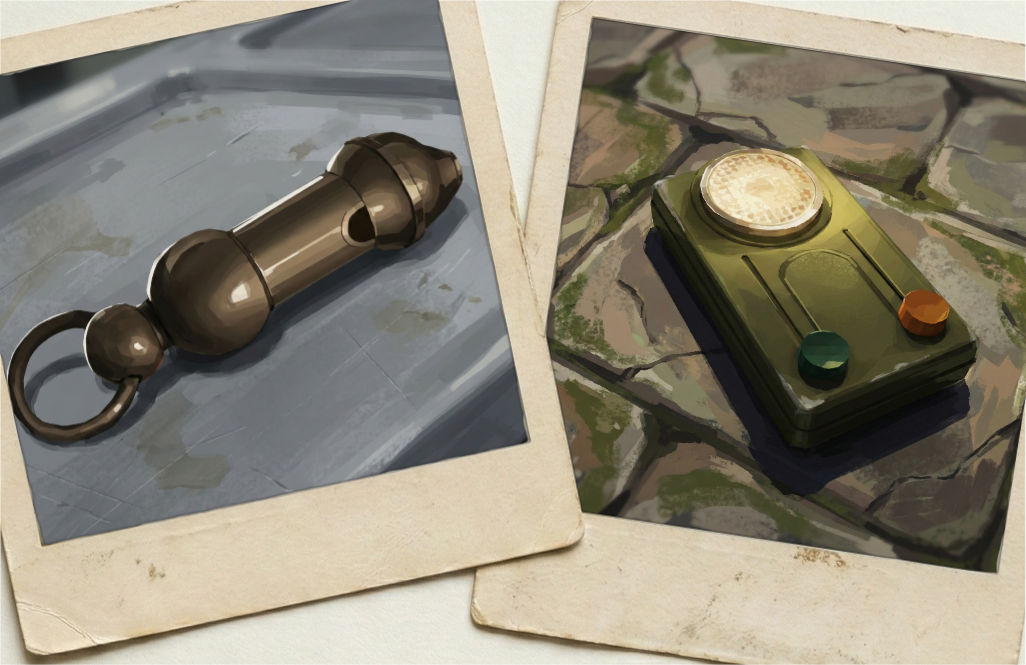
DESCRIPTION:A military-grade signal lamp, consistent with German models from the World War II era. The object is a rectangular block constructed of steel, painted olive drab, with a primary lamp on its face. It features a power toggle and a spring-loaded lever for shutter control (Morse code signalling). Manufacturer's stamp on the casing identifies the maker as AEG (Allgemeine Elektricitäts-Gesellschaft).
PROVENANCE:Acquired via sanctioned auction of the estate of Klaus Richter, a deceased collector in Berlin, Germany. Collector's card indicates the lamp was recovered from a trench following the Battle of the Ardennes (May 1940). It was briefly utilised by elements of the French 5th Light Mechanized Division (5e DLM) before being decommissioned. After eight years in military storage, it was surplussed and entered Richter's private collection.
INITIAL ANOMALY NOTE:The object was received in a sealed glass display case. Upon inspection, it was found to be in full working order. The lamp illuminates when toggled. This is considered highly anomalous, as the two zinc-carbon "Stärke Zelle" batteries within should have been inert for approximately 70 years.
DISPOSITION:EXOID-2911-A was removed from its display case under Class-C containment protocols and secured in a Type-4 EXO transit container. Transferred to Research Division, Site-19, for analysis.
Summary
Non-destructive analysis of EXOID-2911-A has revealed its primary anomalous properties originate from its power source, designated EXOID-2911-A1.
Procedure
Initial scans (X-ray, thermal) showed no irregularities. The object was deemed safe for disassembly. Upon removal of the battery compartment cover, two "Stärke Zelle" batteries (EXOID-2911-A1) were recovered. Acoustic resonance scanning and subsequent analysis revealed the batteries are not chemical cells. They contain a crystalline composite that produces a constant, complex vibration in the infrasonic range (7-12 Hz).
Testing
- Rodent Trials Exposure of Mus musculus to the isolated frequency broadcast by A1 resulted in heightened stress responses, elevated heart rate, and fear-based avoidance behaviour.
- Human Trials (Volunteer Subjects):
- Passive Effect (Holder) The subject holding EXOID-2911-A reports a subjective increase in peripheral visual acuity and a marked increase in confidence. No fear response is registered in the holder.
- Passive Effect (Proximity) Subjects within a 5-meter radius report a low-level, unspecific anxiety.
- Neurological Impact EEG and fMRI scans confirm the infrasonic waves stimulate brain regions associated with spatial perception. The frequency also directly impacts the inner ear (causing mild disorientation in non-holders) and the amygdala (fear centre).
Incident 06-19
During a test of the lamp's mundane function, the shutter mechanism jammed. The holding subject applied force to close it, accidentally dropping and catching the lamp in one motion. All monitoring equipment registered a significant, short-duration spike in the amplitude of the infrasonic waves. Subject reports from the proximity group described a moment of "pure, paralyzing terror."
Follow-Up Testing
Attempts to replicate the spike revealed it is triggered by a specific set of physiological indicators in the holder, consistent with preparation for a hostile physical action (sudden myoelectric spike in the forearm, elevated heart rate above 130 bpm, and a sharp change in galvanic skin response). The effect is triggered even if the object is held through thin fabric (e.g., in a shirt pocket). It is hypothesized that the crystalline composite in EXOID-2911-A1 is sensitive to the holder's bio-electric field.
Recommendations
- Continue analysis of EXOID-2911-A1 to determine the exact mechanism of wave generation and its potential for controlled, weaponized application.
- Request archival search. There is a potential operational parallel with another object in the ICHOR vault: EXOID Shrill Whistle, acquired by the Invisible College circa 1912. The object itself and all related documentation are requested for comparative analysis.
Dr. Lannister,
A search of the vault manifest has revealed that EXOID Shrill Whistle is not in containment.
Legacy records from the Invisible College are incomplete, but we have pieced together the following timeline:
- March 4, 1912 EXOID Shrill Whistle delivered to the College by Agent William Hulmes.
- July 31, 1913 EXO checked out from storage by Agent Alistair Finch for use in "Operation Nightjar."
- August 1913 (est.) Agent Finch is killed in action. His body was not recovered until over a year later. The EXO was not with the remains.
Due to the outbreak of the Great War, the loss was not properly documented or investigated.
We have located the original 1913 research report on the object (photocopy attached). We also have the handwritten report from Agent Hulmes detailing its initial acquisition during "The Sad Ride" case. It is currently being digitized and will be forwarded upon completion.
A formal request has been sent to the Operations Division to initiate a search and recovery mission for EXOID Shrill Whistle.
Description
A standard-issue railway conductor's whistle, constructed of nickel-plated brass. Weight: 58 grams. A maker's mark, AEG, is stamped upon its side. Peering through the aperture reveals the inner surfaces are covered in a most peculiar engraving, more akin to a labyrinth or a map of nerves than any known script or pattern (See Appendix 2) . It is believed this engraving covers the entirety of the inner chamber.
Experimentation
When sounded, the whistle produces a clear, shrill note. Observers within earshot report an immediate and profound sense of melancholy, often accompanied by the spontaneous recall of painful memories related to loss and separation. The effect does not appear to influence the individual sounding the whistle. We theorise the sound produces some form of sympathetic wave which resonates with the sorrowful humours of the human mind.
Passive Observation
When left unattended, the object is inert. However, when carried by a test subject for an extended period, it has been noted to emit faint, breath-like sounds of its own accord. A series of trials was conducted wherein the subject was instructed to perform various physical and mental tasks. A pattern has emerged: the sounds manifest when the subject harbours aggressive intent or contemplates a direct, hostile action against another individual, whom they perceive as an adversary. It seems the object responds to a hostile spirit.
Conclusion
The object is a potent psychotropic tool. Recommend its potential use by College agents in field operations as an instrument of non-lethal incapacitation.
Lead and Context
The sole actionable lead in locating an EXO missing for over a century was the manufacturer's mark: AEG. This is the same manufacturer as EXOID-2911-A ("Found Signal").
AEG (Allgemeine Elektricitäts-Gesellschaft) was a German industrial titan from its founding in 1883 until its dissolution in 1996. During its heyday, the company maintained a corporate museum. After the final bankruptcy, the museum's collection was acquired by a former director, Herr Günter Brandt, an 87-year-old pensioner residing in Bremen. He maintains the collection out of sentiment.
Field Inquiry
I proceeded to Bremen to interview Herr Brandt, accompanied by Agent Eugene Song ("Bishop") for EXO-sensory support. EXOID-2911-A was brought along in a shielded container on the chance it might yield further information.
Brandt was cooperative. He showed us his small museum. He was interested in the lamp but confirmed it was likely part of a mass military order and held no special production records. When asked about the whistle, he knew of it only through corporate lore. He did not possess one but directed us to a display of accessories made for a vintage train carriage: lamps, brass fittings, a Bakelite switchboard. In the early 20th century, AEG fulfilled a single, unusual, comprehensive contract for a London railway company, producing not just the electronics but all hardware. This was considered an amusing corporate footnote for decades. The whistle was almost certainly part of this non-standard order.
Observed Resonance
During the interview, the container for EXOID-2911-A was left open. Agent Song later reported that from the moment we entered the museum, he detected a significant amplification in the lamp's infrasonic output. The frequency was different from the fear-inducing one; none of us felt any discomfort. The effect diminished as we moved away from the museum. Agent Song confirms no other EXO objects are present in the collection.
Assessment
Hypothesis: EXOID-2911-A reacted to the proximity of other, non-anomalous objects created by the same manufacturer in a comparable time period.
Proposed Next Step: We can leverage this sympathetic resonance. By pairing EXOID-2911-A with EXOID-[REDACTED]'s search matrix, we may be able to triangulate the whistle's location, even over a great distance.
Foreword
Use of EXOID-2911-A in conjunction with the EXOID-[REDACTED] matrix was successful. The whistle's location was traced to a flat in London. The resident was identified as William Hulmes, the former Invisible College agent. According to records, he would be 128 years old. Agent Keller and a tactical team were dispatched.
Bodycam Transcript
Addendum
Autopsy Report Excerpt (Hulmes, W.)
...The glowing patterns observed by agents were found to be etched directly onto the subject's entire skeletal structure. The pattern is a perfect match for the internal engraving of EXOID Shrill Whistle. It is hypothesised this is an effect of terminal-stage EXO Attunement. Subject's total body mass was 39 kilograms. This is anomalously low, even for his age and build, as if something more than air left him with his final exhalation.
Agent Keller,
Following your request, we have conducted a deep archival search. Only one relevant document was found. The item is a piece of correspondence between members of the "Black Orchids" clandestine society. It was likely intercepted by the Invisible College, though acquisition details are missing from the file. The letter is dated April 13th, 1912.
Historical Context: The "Black Orchids" were a small but effective group of Enlighters, active across Europe in the 19th and early 20th centuries. The organization was almost completely eradicated during the Second Battle of Ypres on April 22nd, 1915, in what is believed to have been a targeted gas attack.
A digitized copy of the letter is attached.
Craig,
I must urge you to terminate Operation "Wind Against the Waves." We have already received proof that AEG will stop at nothing. The loss of Agent Arjani is not just a tragedy for us all. It is a lesson.
According to Sandra's last communications—which included an intercepted letter from a "Dr. Strauss"—AEG have already achieved significant breakthroughs with their "resonating alloys." Sandra's hypothesis was that they used the London railway contract as a testing ground. It seems she came too close to the truth, and they eliminated her. I insist it was an elimination—Sandra was our finest agent. I do not believe for a moment that she would simply give up and take her own life!
I fear that AEG is far beyond our weight class. We must either stand down, or forge an alliance with a group like the Invisible College or the Chevaliers du Sang. Please, consider my words.
Yours sincerely,
Oswald
Laboratory Video Log
Many the hopes that have fled,
Many the words that are spoken,
Of the one that is dead...